
Create a Household Emergency Information Folder
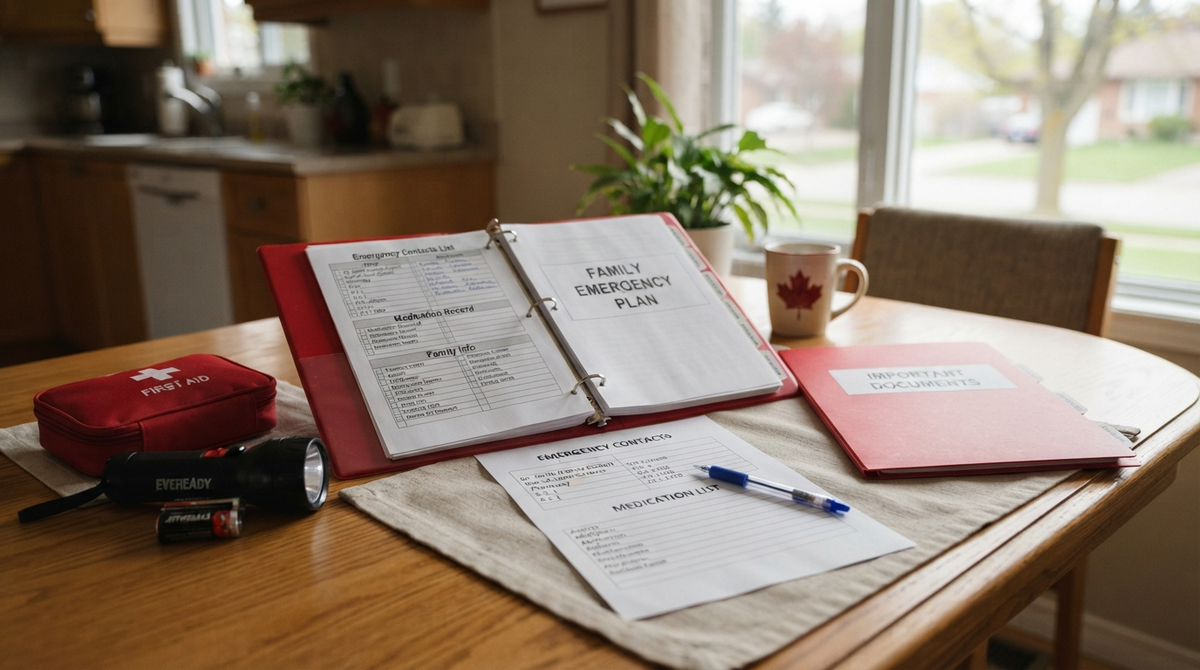
Important household information often ends up scattered between wallets, kitchen drawers, filing cabinets, phones and different family members.
That may not cause a problem during an ordinary day. It can become stressful when someone becomes ill, a caregiver needs information, the power goes out or a household must leave home quickly.
A household emergency information folder brings the most useful details together in one known location.
The folder does not need to be complicated.
It can be:
- A labelled binder
- A sturdy envelope
- A small portable document case
- A secure digital file shared with a trusted person
- A paper copy kept with a household emergency kit
Choose a format that is easy to review and update.
1. Emergency Contacts
Begin with the people who should be contacted during an emergency.
Include:
- A nearby family member or friend
- An out-of-town contact
- A trusted neighbour
- A caregiver or support worker
- Your family doctor
- Your pharmacy
- Your home-care provider, when applicable
- Your veterinarian or pet-care contact
Record each person’s name, relationship and current telephone number.
Do not depend entirely on a mobile phone contact list. A printed list may still be useful when a phone is lost, damaged or out of power.
2. Health and Medication Information
Create a current medication list.
For each medication, include:
- Medication name
- Dosage
- When it is taken
- Why it is taken
- Prescribing healthcare provider
- Pharmacy information
Include regularly used non-prescription medications, vitamins and natural health products.
Also record:
- Allergies
- Important health conditions
- Mobility or communication needs
- Medical equipment used at home
- Alberta personal health number
- Instructions a caregiver may need during an emergency
Review unclear medication information with a pharmacist or healthcare professional.
Do not change or stop a medication based only on information found online.
3. Household and Insurance Information
Include useful household contacts such as:
- Home or tenant insurance provider
- Vehicle insurance provider
- Electricity provider
- Natural-gas provider
- Municipal utility contact
- Building manager or landlord
- Trusted repair or maintenance provider
Record the location of:
- Main water shutoff
- Electrical panel
- Fire extinguisher
- Emergency kit
- Flashlights
- Spare keys
- First-aid supplies
Only turn off household utilities when it is safe and appropriate or when emergency officials instruct you to do so.
4. Pet Information
Emergencies affect pets too.
Record:
- Pet names and descriptions
- Veterinarian information
- Feeding instructions
- Medication information
- Licence or microchip information
- Location of carriers, leashes and supplies
- A trusted person who could care for each pet
Some emergency accommodations may not accept pets. Identify a friend, family member, boarding facility or other safe option in advance.
5. Personal Support Network
A personal support network may include trusted family members, friends, neighbours, caregivers and healthcare providers.
Choose people who understand the type of assistance you may require.
Discuss:
- How they can contact you
- Where the information folder is kept
- Transportation or mobility assistance
- Medical equipment
- Communication requirements
- Pet care
- A safe meeting location
- Who should check on you during an emergency
The Government of Canada recommends arranging for a friend or neighbour to check on or help evacuate an older adult who lives alone.
Give copies of your plan only to people who genuinely require the information.
Protect Private Information
A household folder should be useful without becoming a security risk.
Do not place the following in an openly accessible folder:
- Banking passwords
- Debit or credit card PINs
- Email passwords
- Social-media passwords
- Complete online account credentials
- Alarm-system access codes
- Unnecessary copies of identity documents
Instead, identify a trusted person who knows how protected information can be accessed when genuinely necessary.
Store original legal, financial and identity documents securely.
The emergency folder can state where those documents are located without containing every original document.
Keep the Folder Current
Review the folder at least every six months.
Update it after:
- A medication change
- A move
- A changed telephone number
- An insurance renewal
- A change in caregivers
- A change in emergency contacts
- A change in a pet’s care requirements
The spring and fall clock changes can provide convenient reminders to review household information, emergency supplies and smoke alarms.
Store the folder somewhere memorable and accessible to household members, but not openly visible to visitors.
Tell at least one trusted person where it is kept.
Prepare a Small Grab-and-Go Copy
Consider placing a smaller version in your emergency kit.
Include:
- Emergency contacts
- Medication list
- Allergies
- Important health information
- Insurance contacts
- Pet information
- Meeting location
- Transportation plan
Protect the pages from moisture in a sealed pouch.
Household Information Folder Checklist
Use this checklist to build or review your folder.
Emergency contacts
- Emergency contacts
- Nearby contact
- Out-of-town contact
- Doctor information
- Pharmacy information
- Current medication list
- Allergies
- Health conditions
- Alberta health number
- Insurance contacts
- Utility contacts
- Household shutoff locations
- Emergency-kit location
- Pet-care information
- Caregiver information
- Transportation plan
- Meeting location
- Date last reviewed
Trusted Sources and Planning Tools
- Government of Canada — Make an Emergency Plan
- Government of Canada — Emergency Plan Form
- Government of Canada — Emergency Kit Checklist
A little organization now can make a difficult situation easier later.
Begin with one page of emergency contacts. Add the remaining sections gradually and review the information regularly.
Simple takeaway: Important information is most useful when it is accurate, protected and easy to find.